Franz Siasat on E-Waste and Refurbishing Tech
An interview with Franz Siasat, Founder and CEO of Zolo
This article is part of Circular Sydney, ReCo’s initiative to empower sustainable businesses, supported by the City of Sydney Knowledge Exchange grant. See how it came to life in our case study.

, Zolo
Written by
, Lina Wood
, Danling Xiao
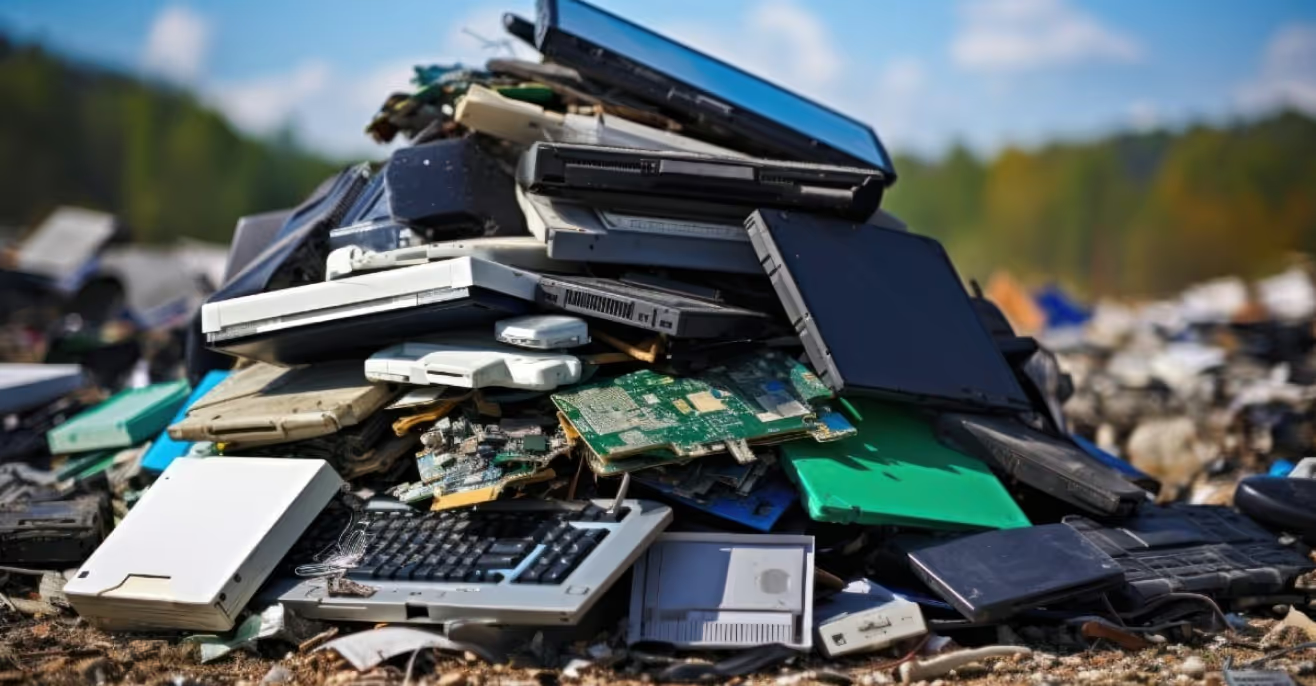
Image: rawpixel.com / stock.adobe.com
Summary
Australia generates 140,000 tonnes of e-waste a year, buys 3 million televisions and 4 million computers, and sends 88% of them to landfill. Franz Siasat, founder and CEO of Zolo, argues that reuse beats recycling on both environmental and commercial grounds, and explains why dismantling electronics remains stubbornly manual and expensive.
What this interview covers
What’s the situation with e-waste in Australia?
How does Zolo reuse and refurbish end-of-life tech? what impacts are you creating?
What are some of the key things you’ve learned as a circular startup?
How do you see Zolo’s role in the future of the e-waste industry?
In this interview, Franz Siasat shares insights on the challenges of e-waste, Zolo’s tech refurbishing process, and their vision for a more sustainable electronic product ecosystem.
In Australia, we generate 140,000 tonnes of e-waste annually.
Franz Siasat, Founder and CEO, Zolo
What’s the situation with e-waste in Australia?
E-waste has become a significant issue around the world. In Australia, we generate 140,000 tonnes of e-waste annually. That’s a huge amount. Every year, we buy 3 million TVs and 4 million computers, with 88% of them ending up in landfills (Clean Up Australia).
The government has the National Television and Computer Recycling Scheme, which requires companies importing or producing these products to pay for a portion of recycling costs. It puts a level of accountability onto manufacturers, but we’re still far from full product stewardship.
E-waste recycling is complex because of the wide range of products and the manual process of taking them apart. Right now, there’s no standardised recycling process to handle these products efficiently. The process is often quite expensive.
At Zolo, we believe reusing is best for the environment, rather than recycling. We work with businesses and refurbish their end-of-life tech. We’ve built our capacity and infrastructure to reuse in the sector, keeping technology in use for as long as possible. It makes sense from a commercial and environmental standpoint.
How does Zolo reuse and refurbish end-of-life tech? What impacts are you creating?
We collaborate with businesses and collect their old computers and office appliances. These businesses get incentivised to dispose of their old tech. We refurbish and resell the products to small businesses and not-for-profits, at an affordable price.
Data security is a top priority for us. We strictly adhere to federal government laws when it comes to data erasure. We build our infrastructure to guarantee that all data on the tech we receive is permanently erased. We also provide a certificate to confirm the erased data can’t be retrieved.
Partnerships are a key part of Zolo’s strategy. I’ve always had a vision to build a business that thrives off partnerships. Two is better than one, especially when it comes to solving a problem. Through partnerships, we can create solutions that are mutually beneficial for both parties, and, ultimately, for the greater good.
Our partnerships are purpose-led, with a focus on shared values. Zip Co is a great example of that. It’s an honour to work with them because our values align.
From a social impact standpoint, our goal is to make technology more accessible, especially for those who can’t afford the latest tech. I believe technology has the power to build and fulfil dreams. Take Zolo as an example, I started it with a MacBook Pro in my apartment. I want to help extend that access to everyone. As a startup, our current goal is to donate 20 devices per month.
Since Zolo started in 2020, we’ve diverted 2000+tonnes of e-waste from landfill and recovered over 10k+ devices, given new life and put back into circulation.
What are some of the key things you’ve learned as a circular startup?
First and foremost, it’s important to establish our values upfront, as a business and as individuals. When we have a clear set of values, we can identify how we can be a force for good collectively. As long as we stay true to our core, everything else will line up.
In terms of our work, we need more awareness and regulations on responsible e-waste disposal and recycling. I like to consider the tobacco control movement as an example. There’s now a lot of force and urgency around anti-smoking. We set rules and regulations against it, and it works. We need a similar approach when it comes to addressing e-waste.
Ultimately, we need to promote the benefits of circular economy practices. It’s not only good for people and the planet, but also for businesses. In our case, we resell the technology we refurbish and repair. We make money from it. Businesses are incentivised to dispose of the old tech in a sustainable manner, and recoup the funds to invest in new tech. The old tech finds new life and helps others pursue their dreams. It’s win-win.
There are many benefits to a circular economy, but we need to articulate it and advocate for it. We need policymakers, businesses and people to embrace it and build the ecosystem together.
How do you see Zolo’s role in the future of the e-waste industry?
Technology unlocks opportunities for growth and progress. We’re always going to have the latest and greatest technology. If you’re a software company, you’ll need to make sure that your developers are working on the latest, best technology.
Upgrading to new tech is inevitable, but we can find the right balance. This balance is where opportunities are, and where Zolo plays its role. We’ll continue to advocate for both the new and the old, while working to standardise and streamline our refurbishing process.
Transparency is a significant concern in the recycling industry. Where do things go? Are they really being recycled? What’s the environmental impact? As we innovate and grow, we’d like to introduce tokens and incentive systems, using blockchain technology for greater transparency.
Besides process, I believe transparency should extend to how companies make money and who they work with. If you look at our partnerships roster, Zolo gravitates towards purpose and values.
Integrity is incredibly important. It starts with the culture of an organisation. On our team, everyone’s passionate and excited about what we’re doing, and we’ll continue to do our best in this space.
Frequently asked questions
How much e-waste does Australia generate?
About 140,000 tonnes a year. Australians buy 3 million televisions and 4 million computers annually, and 88% end up in landfill according to Clean Up Australia.
Is there a national scheme?
The National Television and Computer Recycling Scheme requires companies importing or producing these products to fund part of the recycling cost. Siasat describes it as accountability but well short of full product stewardship.
Why is e-waste recycling so difficult?
The range of products is wide and taking them apart is largely manual. There is no standardised process, which makes it slow and expensive.
Why is reuse better than recycling?
Because it keeps technology in use for longer, which is better environmentally and makes commercial sense. Zolo refurbishes business end-of-life equipment rather than breaking it down.
How does the model work?
Businesses are incentivised to hand over old computers and office equipment, which Zolo refurbishes and resells to small businesses and not-for-profits.
Who does Zolo work with?
Australian businesses including Canva, Zip Co, Dyson and Bank Australia, providing secure data destruction alongside recovery and refurbishment.
Relevant links
Written by
Lina Wood
Editor
Lina Wood is a science communicator and writer, graduated from a master degree of science communication at The Australian National University.
Danling Xiao
Editor
Danling Xiao is an award-winning entrepreneur and Strategic Director at ReCo. With over a decade of experience spanning brand strategy, customer insight and content marketing, she helps founders and leadership teams navigate complex, highly regulated markets to make confident, high-stakes decisions.