Gemma Dawson on the City of Sydney’s Waste Strategy
An interview with Gemma Dawson, Waste Strategy Manager at the City of Sydney
This article is part of Circular Sydney, ReCo’s initiative to empower sustainable businesses, supported by the City of Sydney Knowledge Exchange grant. See how it came to life in our case study.

, City of Sydney
Written by
, Myra Mow
, Danling Xiao
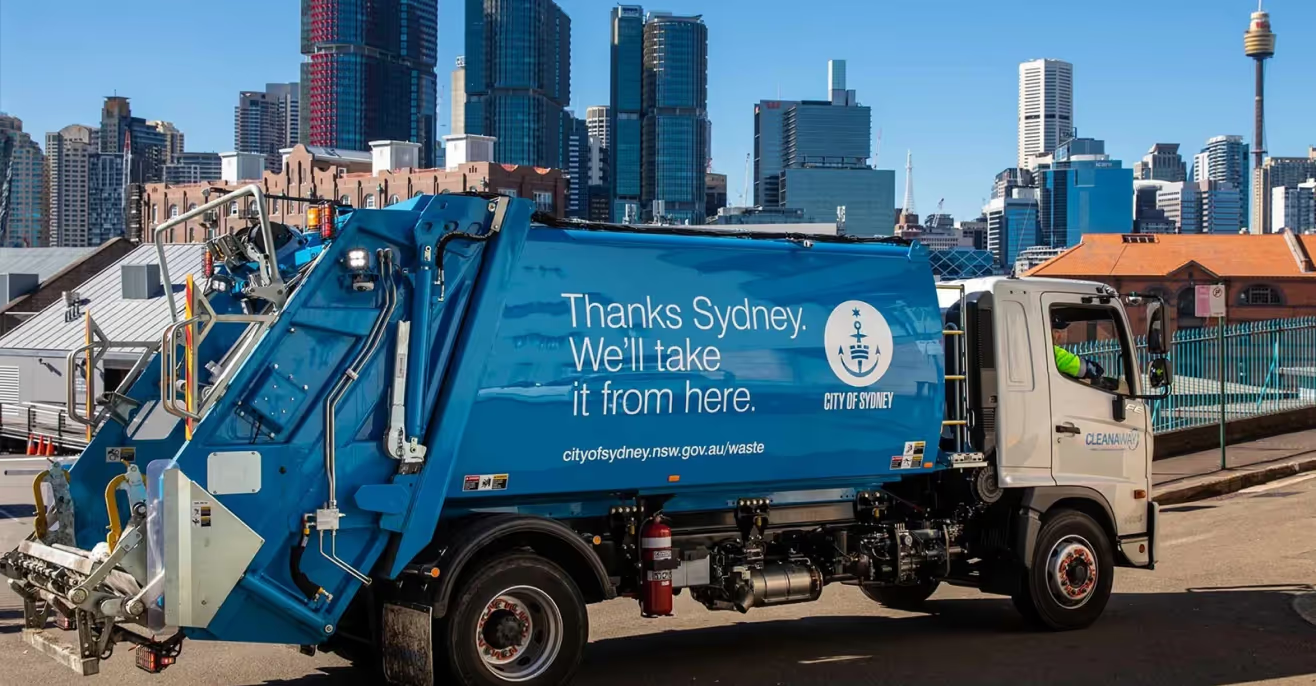
Image: City of Sydney
Summary
The City of Sydney is aiming for zero waste to landfill by 2030 and net zero emissions by 2035. Gemma Dawson, its Waste Strategy Manager, sets out the three tiers of what a council controls, manages and merely influences, why the commercial sector’s half a million tonnes a year is the hardest of them, and why recycling still sits below avoidance, reuse and repair.
What this interview covers
How does the city of Sydney tackle waste?
How is the city tracking its zero waste to landfill targets?
How does the city address the household waste challenge?
Can you share more about the city’s food scraps recycling service?
How can residents help address some of the city’s challenges?
In this interview, Gemma shares how the City of Sydney addresses waste challenges. From reducing waste, diverting it from landfills to community engagement, the City is committed to achieving its ambitious environmental targets. Let’s dive into the details.
Recycling is better than landfilling, but it still has a footprint, and it’s expensive.
Gemma Dawson, Waste Strategy Manager, City of Sydney
How does the City of Sydney tackle waste?
The City of Sydney has ambitious environmental goals, aiming to reach zero waste to landfill by 2030 and net zero emissions by 2035. To tackle waste, we have three priorities:
Keep our city clean. As a local government, we make sure our community is safe from the impact of waste. We collect waste from our residents and from our own properties, including our offices, parks, public pools, libraries and community centres.
Reduce waste. All types of waste have an environmental impact. Recycling is better than landfilling, but it still has a footprint, and it’s expensive. We prioritise avoidance, reuse, repair and refurbishment. We encourage our community to consider these options before recycling.
Do the best with what we have to manage. As a local government, we rely on the commercial sector for recycling. We can help improve recycling by getting the highest quality waste. By doing that, we keep them in the recycling system for as long as possible.
The City separately collects more than 21 waste streams for recycling. We also educate and empower our community to recycle better. This helps make sure the waste we collect is clean, of the highest value and not contaminated.
We’ve been actively advocating for changes for a long time. We need the federal and state governments to work with us and where relevant provide more regulation so that we’re not relying on consumer behaviour change alone. In our waste strategy, we emphasise a shared responsibility among government, industry and community. We need everyone to work together to achieve our environmental goals.
How is the City tracking its zero waste to landfill targets?
When it comes to waste management, we need to understand the City has three levels of responsibilities:
Waste we control: This is waste generated in our own buildings and projects. We produce about 22,000 tonnes yearly, including construction and demolition waste.
Waste we manage: This includes residential waste, just over 65,000 tonnes a year; and waste in public spaces, like street litter bins, parks and stormwater pits, about 8,000 tonnes a year.
Waste we influence: We don’t directly manage waste from businesses, but we actively advocate and collaborate with them. We estimate that the commercial sector in our local government area contributes to over half a million tonnes per year, which is about 13% of waste generated in NSW.
Our 2021 waste targets focus on diverting waste from landfill. We achieved a 90% landfill diversion rate within our own buildings and consistently high rates for construction and demolition waste. Diversion rate for public space increased from 18% in 2016 to 57% in 2022.
However, we need to do better with residential waste. Out of the 65,000 tonnes of household waste, about 30% is recycled.
Educating residents about how to generate less waste and recycle more can be challenging, especially as we have a residential population that moves very often (up to 50% of residents move in and out of our area every four years). To address this we continue to improve and expand our education programs and services.
How does the City address the household waste challenge?
One of our top priorities is to make it easy and accessible for residents to recycle. We know residents need enough space to separate their waste and recycling and require easy access to bin rooms. That can be a challenge in Sydney where space is scarce and expensive. We work with planners and building developers to improve building design and making sure that all residents have access to the services we provide.
We’ve identified 20 different waste streams to separately collect and recycle, including food, clothing, toys, mattresses, electronics and plastics. Some of our other initiatives include:
Recycling stations across the city
Clothing and toy swaps
Community engagement pop-up stalls
Educational webinars to encourage recycling and reuse
Doorstep recycling collection services
Ask a Waste Expert online enquiry service
Every quarter, we host Recycle It Saturday at our depot in Alexandria. Residents can drop off anything from e-waste and textiles, to light bulbs, x-rays and gas cylinders. We donate reusable items and recycle the rest.
We’re also running a food scraps recycling service that is available to 21,000 households. These scraps are converted into compost, mulch and soil conditioners.
Can you share more about the City’s food scraps recycling service?
The City’s food scraps recycling service is one of the actions that we take to achieve our zero waste target by 2030. Food waste makes up a third of our residents’ red bins. It produces methane when sent to landfills. Our program saves food scraps and converts them into resources that nourish the environment.
We started a trial program in July 2019. To enable us to get off to the bestpossible start we asked our residents to volunteer to sign up to the service. Participants received free bins, caddies and liners. We collect the food scrapsonce a week from houses and twice a week from apartment buildings, and bystarting small we have been able to test and refine the service based onfeedback.
Thistrial period officially ended in October 2021 however the service is ongoing. We’re evaluating the results and planning how to implement a broader rollout tothe rest of our community. This is challenging, with 80% of our residentsliving in apartment buildings, Currently, the service is available to more than21,000 households, including 1,000 houses and over 280 apartment buildings.
Currently,we compost food scraps into mulch and soil conditioners at a composting facility. While composting provides a good environmental outcome we are also exploringusing black soldier flies for processing. The fly larvae turn our food wasteinto protein and fertiliser to save even more greenhouse gas emissions. The food scraps recycling service is an exciting program that could be a gamechanger for household waste.
How can residents help address some of the City’s challenges?
Residents in our local area can play a vital role in helping us with our challenges:
Use our collection and recycling services
Explore our website to learn about our services. Almost everything that ends up in the bin has a corresponding collection service.
Learn how to recycle correctly
Contamination impacts recycling values. Plastic bags, for instance, should not be put in recycling bins. It’s tricky to know what can or cannot be recycled, but you can learn more through our website. Ask our virtual assistant, our waste expert, or even your local community. We’ll discuss more about recycling tips in this post.
Reduce your waste
There are many other things you can do to reduce waste, for example:
Take a reusable shopping bag when you go shopping
Join or start a share group in your neighbourhood and swap before you shop
Bring your own coffee cup and takeaway container
Try home composting if you have space
Buy items with no packaging or environmentally friendly packaging.
We understand that people are often time poor, so we also share lots of hints and tips on waste reduction on City of Sydney News.
Set an example, encourage others to join you
We need to normalise responsible behaviour. Our studies show that people tend to follow what their neighbours do. When they see others managing waste responsibly, they tend to follow.
The City’s responsibility is to improve recycling setup and empower residents, but it also depends on residents taking responsibility. It’s a collective effort that requires collaboration from everyone to make a positive impact.
Learn more: How to recycle in the City Of Sydney
Frequently asked questions
What are the City of Sydney’s waste targets?
Zero waste to landfill by 2030 and net zero emissions by 2035, supported by a waste strategy built on shared responsibility between government, industry and community.
How much waste does the council actually control?
Three tiers. About 22,000 tonnes a year it controls directly, just over 65,000 tonnes of residential waste plus 8,000 tonnes from public spaces that it manages, and more than 500,000 tonnes from the commercial sector that it can only influence.
How significant is commercial waste?
The commercial sector in the local government area produces over half a million tonnes a year, roughly 13% of all waste generated in New South Wales.
How many waste streams does the City collect?
More than 21 are separately collected for recycling, and the council educates residents to keep those streams clean and uncontaminated so the material holds its value.
Why is recycling not the first priority?
Because it still carries an environmental footprint and a cost. The City prioritises avoidance, reuse, repair and refurbishment before recycling.
What diversion rates has the City achieved?
A 90% landfill diversion rate within its own buildings, with consistently high rates for construction and demolition waste.
Written by
Myra Mow
Editor
Myra Mow is an environmental science graduate from the University of Queensland. She loves nature, growing up planting and harvesting fruit and vegetables. She’s passionate about waste reduction and recycling, with a special focus on organic waste management.
Danling Xiao
Editor
Danling Xiao is an award-winning entrepreneur and Strategic Director at ReCo. With over a decade of experience spanning brand strategy, customer insight and content marketing, she helps founders and leadership teams navigate complex, highly regulated markets to make confident, high-stakes decisions.