Nila Rezaei on Designing Products for Circularity
An interview with Nila Rezaei, Co-founder of RK Collective
This article is part of Circular Sydney, ReCo’s initiative to empower sustainable businesses, supported by the City of Sydney Knowledge Exchange grant. See how it came to life in our case study.

, RK Collective
Written by
, Danling Xiao

Image: RK Collective / Nila Rezaei
Summary
Sustainability in product design is usually reduced to materials, and recycled content only partly addresses the problem. Nila Rezaei, co-founder of RK Collective, argues for looking across the whole lifecycle from sourcing to end of life, and makes a harder point: a sustainable product that compromises usability will not be adopted, so human needs have to be met first.
What this interview covers
How can we design and make sustainable products?
Does sustainability change how we use products?
What are the barriers to creating sustainable / circular products?
Are manufacturers open to change?
How can collaboration drive sustainable design?
How can consumers navigate greenwashing?
What is your vision for the future of products?
In this interview, Nila Rezaei delves into the connection between product design and circularity. She offers valuable insights on usability, design challenges and strategies for creating products that contribute to a circular economy.
Design must first fulfil human needs. Usability is not negotiable.
Nila Rezaei, Co-founder, RK Collective
How can we design and make sustainable products?
Our current design choices are driven by the overconsumption culture. Before designing a new product, we need to question if it’s needed, and how it can solve a real problem.
Designing for sustainability means meeting genuine human needs. We organise a wealth of information, transform it into a deliberate and elegant outcome that addresses those needs.
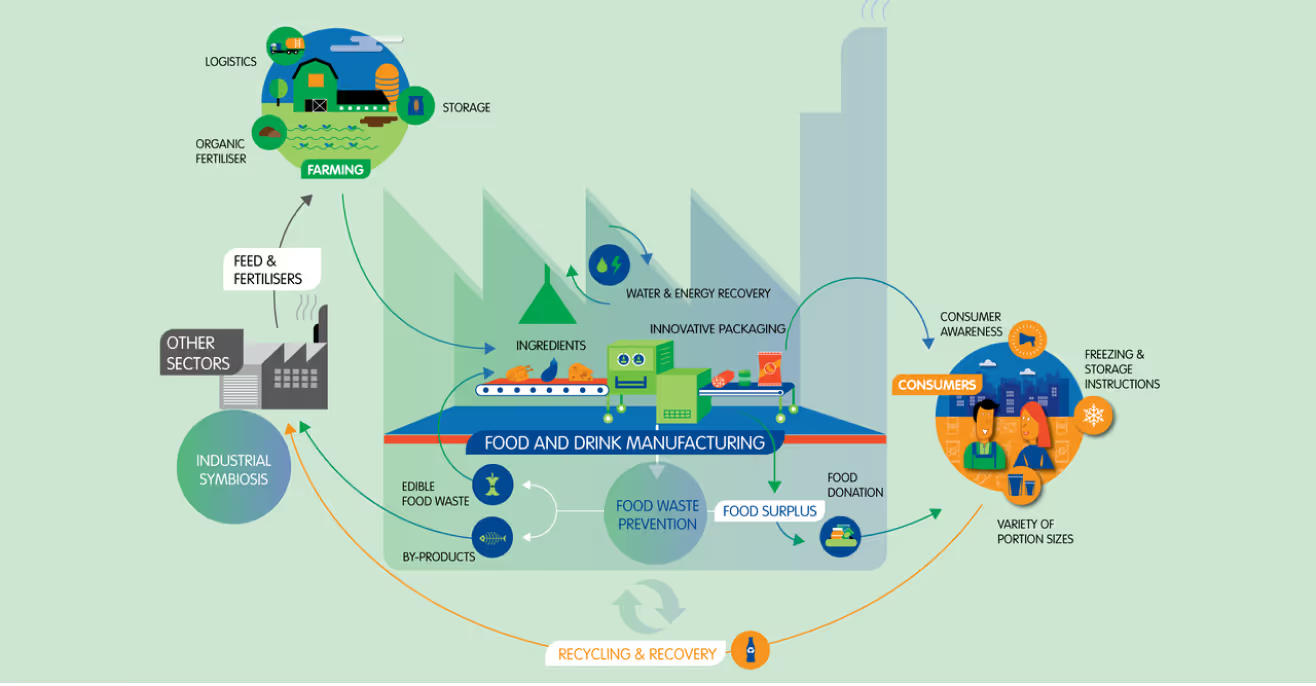
In the design process, we need to think holistically. Often, when we talk about sustainability, the focus is solely on materials. Using recycled or green materials could partially address the problem.
We need to understand the product lifecycle and the impact at each stage—sourcing, manufacturing, transportation, usage duration and end-of-life. We can then minimise the impact and extend the life of a product. We’ve already seen great circular approaches like product-usage services and rentals.
Everyone in the supply chain has a role to play. Manufacturers and brands should take responsibility. As designers, we can educate ourselves and make a significant impact at an early stage during the design process.
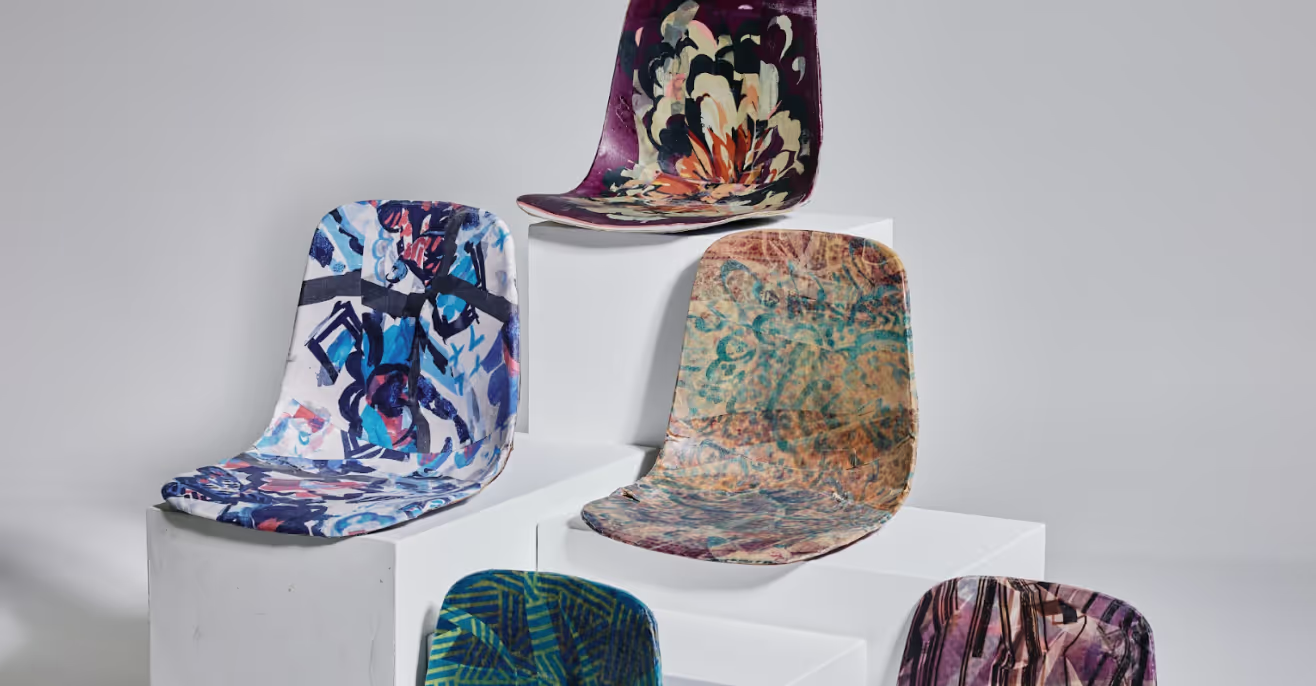
Image: Crafted Liberation / RK Collective
Does sustainability change how we use products?
Sustainability and circularity may require new ways of interaction. If this is different from what people are used to, you need education and evidence to explain design decisions.
However, the fundamental goal is to design products that genuinely meet human needs. We can compromise desirability and user experience at the cost of sustainability, as the product will not be adapted.
Design must first fulfil human needs. Usability is not negotiable. Get that right first, then make sure you’re also applying principles of sustainability, longer lifetime and designing to manage the end of life of the product.
What are the barriers to creating sustainable / circular products?
The biggest barrier is getting people to take risks. Sustainability challenges the status quo—not only the existing infrastructure, but also our culture and the way we live. It requires a lot of changes.
That includes financial challenges as well. It requires big investments upfront. We can say for sure that there will be an impactful outcome from the investment, but it takes time to have those outcomes.
How we overcome them is by taking a step-by-step approach. We can’t think about all the risks upfront because it’s too overwhelming.
We can identify the smaller problems and take calculated risks. Break down a complex system into manageable compartments, and tackle them individually. Make improvement over time while keeping the goal in sight. All the small steps will eventually contribute to solving larger challenges.
I’ve worked with clients where we began with small local projects to demonstrate the impact of design and create a sense of change. It became easier to embrace larger investments and drive bigger transformations. It’s about gradually building confidence and highlighting the potential for growth.
The biggest barrier is getting people to take risks. Sustainability challenges the status quo—not only the existing infrastructure, but also our culture and the way we live.
Are manufacturers open to change?
But the manufacturing industry has long-established processes and infrastructure. It’s difficult for them to change. But it’s not impossible—if you can demonstrate the benefits, and collaborate with them to work out the necessary steps to change.
I’ve had positive experiences with manufacturers who are genuinely interested and willing to make changes. We had to do a lot of planning and thinking beforehand, which allowed us to make a stronger case when approaching them. We also involved them from the start, rather than making last-minute requests. It’s a collaborative process.
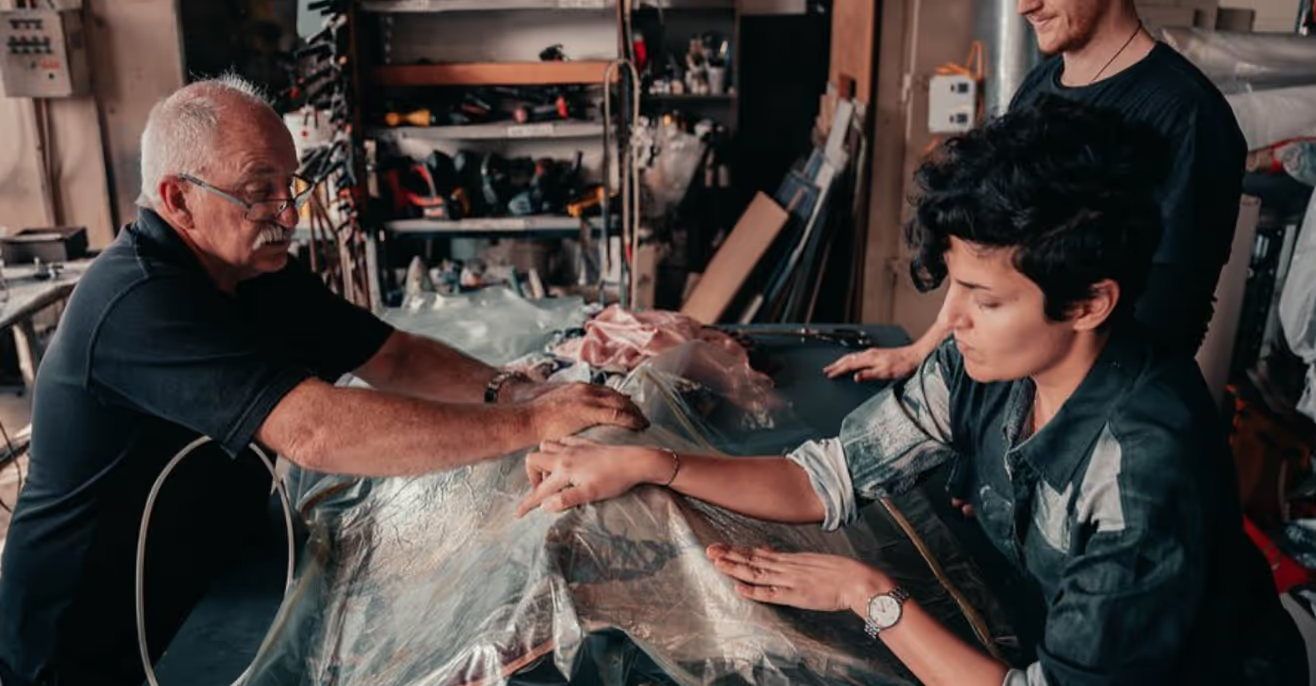
Photo: Crafted Liberation, Nila Rezaei / RK Collective
How can collaboration drive sustainable design?
Collaboration is at the heart of driving meaningful change in sustainable design. It requires input from diverse stakeholders—designers, manufacturers, brands and end users—to create products that are not only functional but also align with circular economy principles. By fostering partnerships, we can leverage collective knowledge and expertise to overcome challenges, innovate solutions and scale impact.
Our project Crafted Liberation shows a great outcome from collaboration, working with partners including our manufacturing partner, the Australian Design Centre and ReCo Digital. For example, working with ReCo Digital, we focused on establishing a cohesive brand identity and digital marketing experience that aligned with the project’s vision. Together, we crafted a narrative that resonated with audiences, highlighting the project’s mission and values. Explore case study here.
Collaboration like this shows that sustainable design doesn’t happen in isolation—it’s about bringing together different perspectives to create truly innovative and impactful solutions.
Image: Wasteland, ReCo Digital / Nila Rezaei for Vert Design
How can consumers navigate greenwashing?
Think holistically and make conscious decisions on the things you buy. Do you need one more water bottle? Can you buy second hand goods? Try to minimise your consumption.
Consider the entire lifecycle of a product. Don’t simply focus on material choices and judge a product based on it alone. Materials are essentially physical matters, be it metal, plastic, glass or ceramic. They’re not inherently good or bad. It is the way we use them that determines their impact.
Usability and longevity are important. A product may not be made from recycled plastic, but it’s okay if it can last a lot longer. So it’s not really a yes or no, recycled or not recycled question.
Sustainability is about the countless small decisions we make in our daily lives. From taking shorter showers and turning off lights to using energy-efficient windows, each decision accumulates to drive our overall impact and carbon footprint.
What is your vision for the future of products?
I strongly believe in the product-service system, like the leasing or subscription model. Users can rent a product and return it, while companies take responsibility throughout the lifecycle.
We’ll produce fewer items and share them among many users. We can reduce energy consumption in the manufacturing process. We can make sure the products are designed for durability and are responsibly treated at end of life.
If we can make things locally, it removes the need for transporting goods over long distances. That will be true circularity, but we’ll need to get there step by step.
rk-collective.com
Frequently asked questions
Is using recycled material enough?
No. Rezaei argues it only partly addresses the problem, and that the lifecycle has to be understood at every stage: sourcing, manufacturing, transportation, usage duration and end of life.
Where should sustainable design start?
Before the product exists, by asking whether it is needed at all and what real problem it solves. Designing for sustainability means meeting genuine human needs.
Can sustainability be traded against usability?
Not successfully. If desirability and user experience are compromised, the product will not be adopted, so the sustainability gain never materialises.
What happens when a product works differently?
Circular products sometimes require new ways of interacting. That needs education and evidence to explain the design decisions behind them.
Who is responsible in the supply chain?
Everyone, in her account. Manufacturers and brands should take responsibility, and designers can make a significant impact early, at the design stage.
What circular models already work?
Product-usage services and rentals, which shift the relationship from ownership to access and extend how long a product stays in use.
Relevant links
Written by
Danling Xiao
Editor
Danling Xiao is an award-winning entrepreneur and Strategic Director at ReCo. With over a decade of experience spanning brand strategy, customer insight and content marketing, she helps founders and leadership teams navigate complex, highly regulated markets to make confident, high-stakes decisions.