
50k+ Visitors
In-person at Customs House
100k+ Reach
Online audience
40k+ Viewers
In the video's first week
About Wasteland
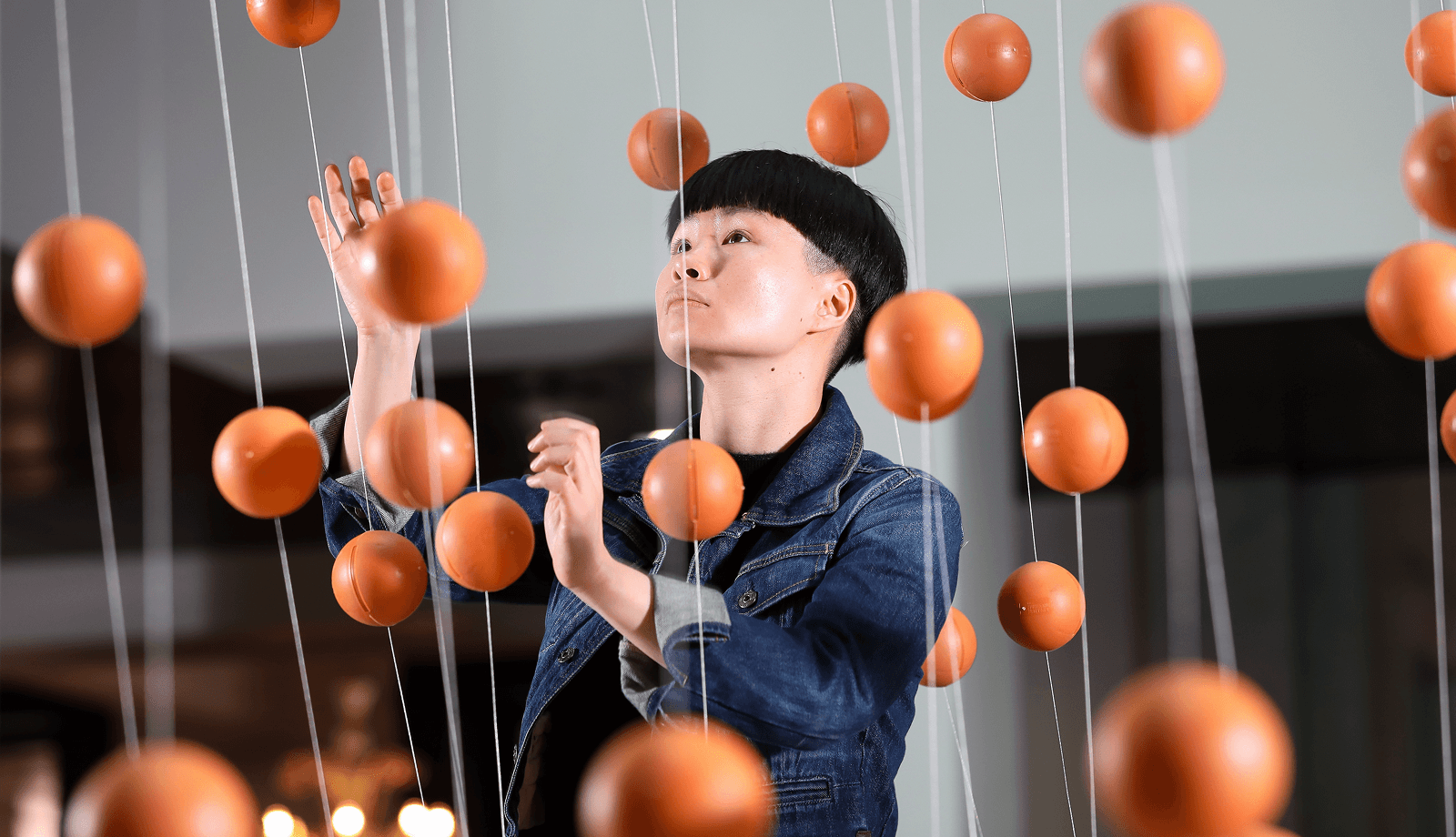
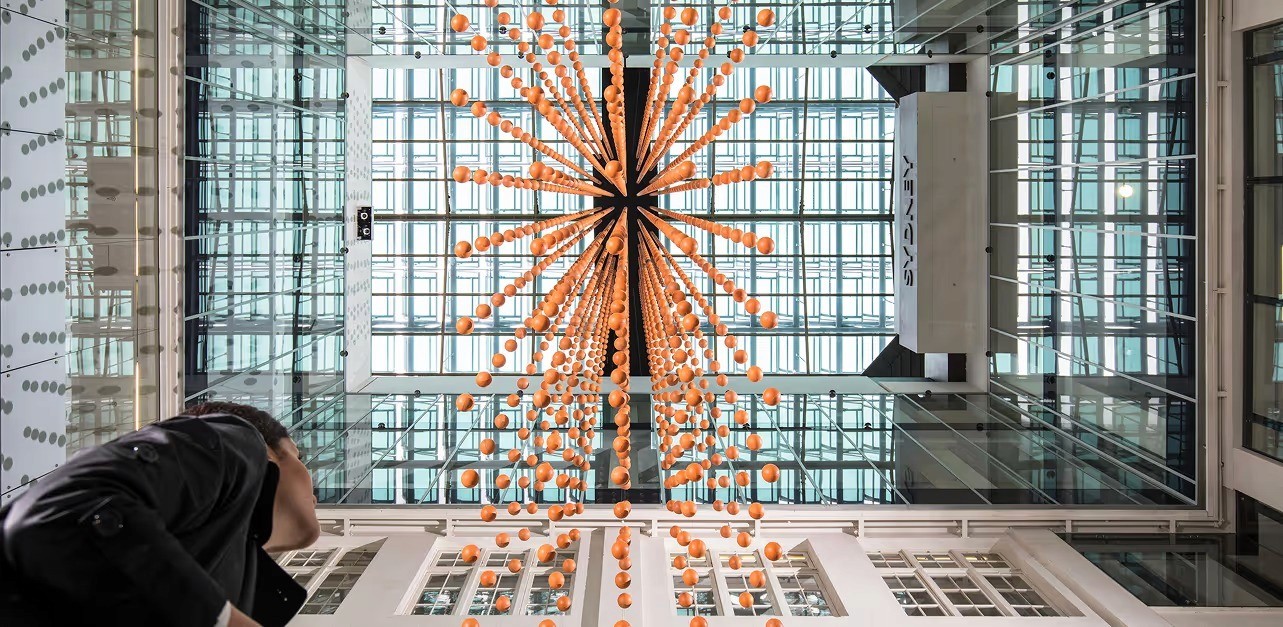
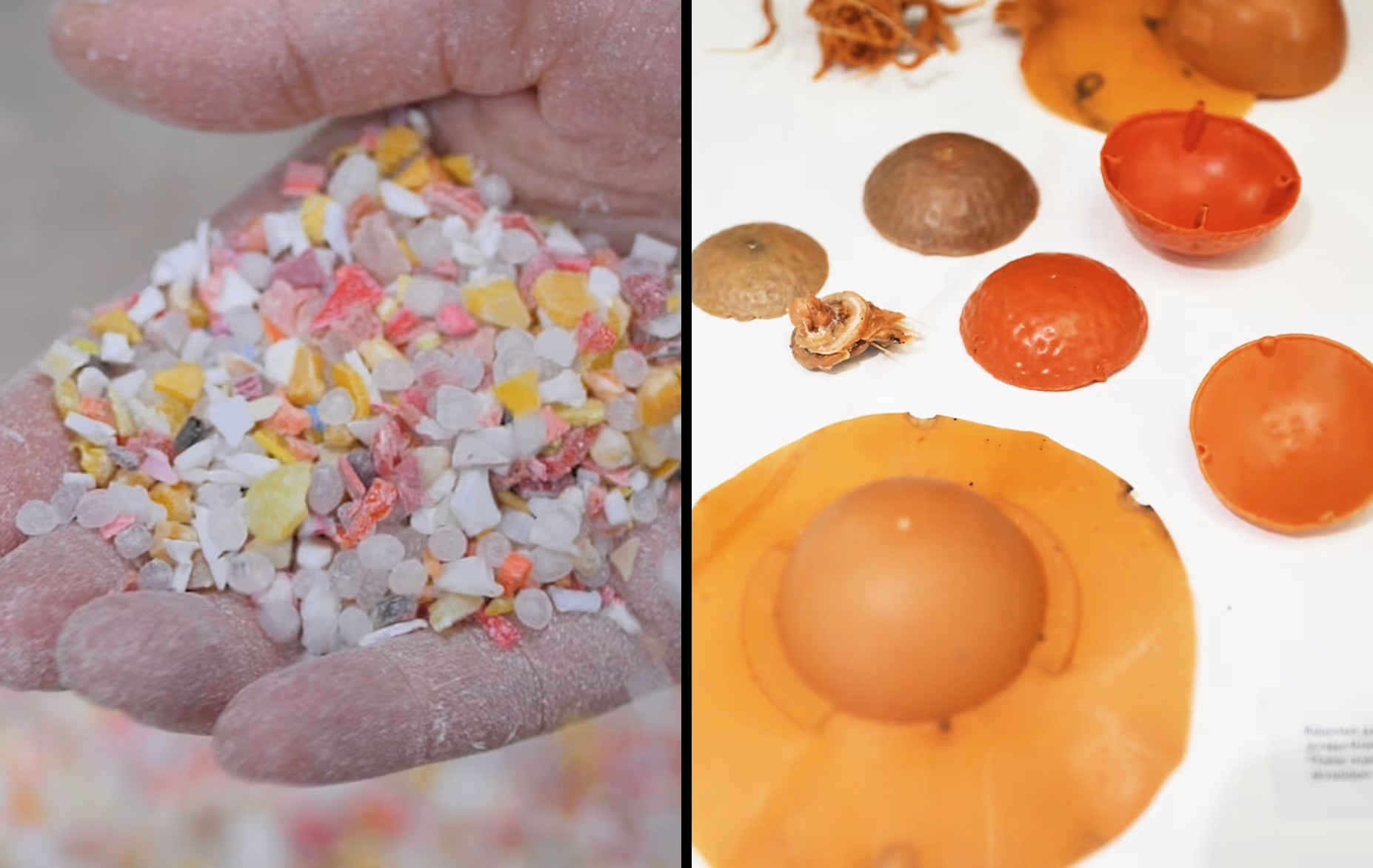
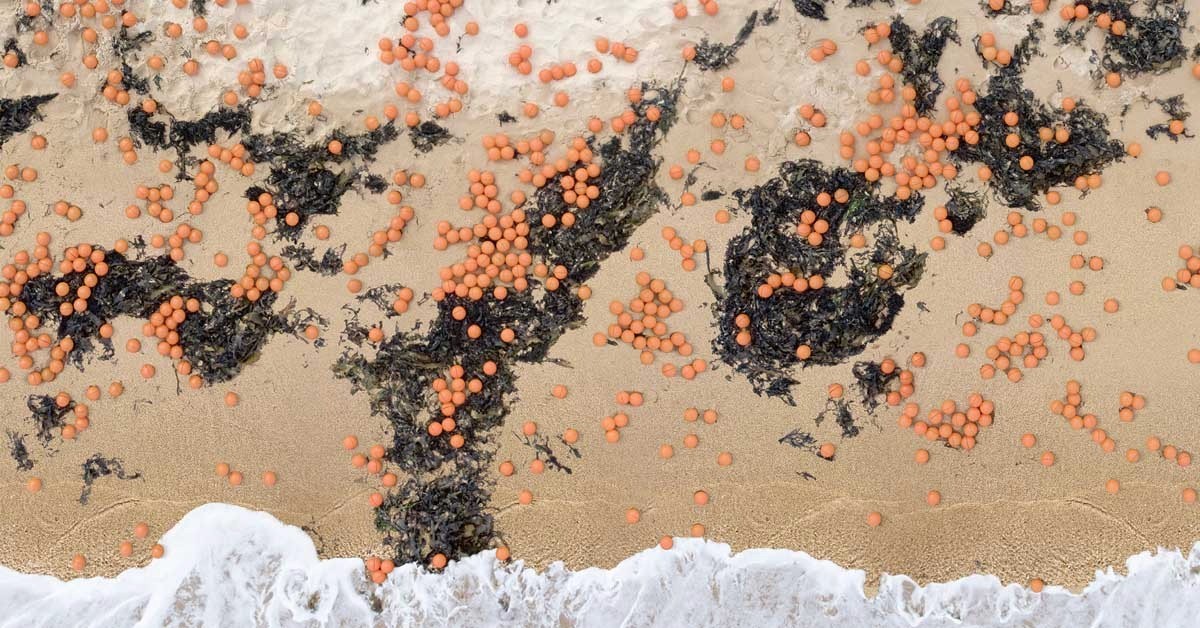
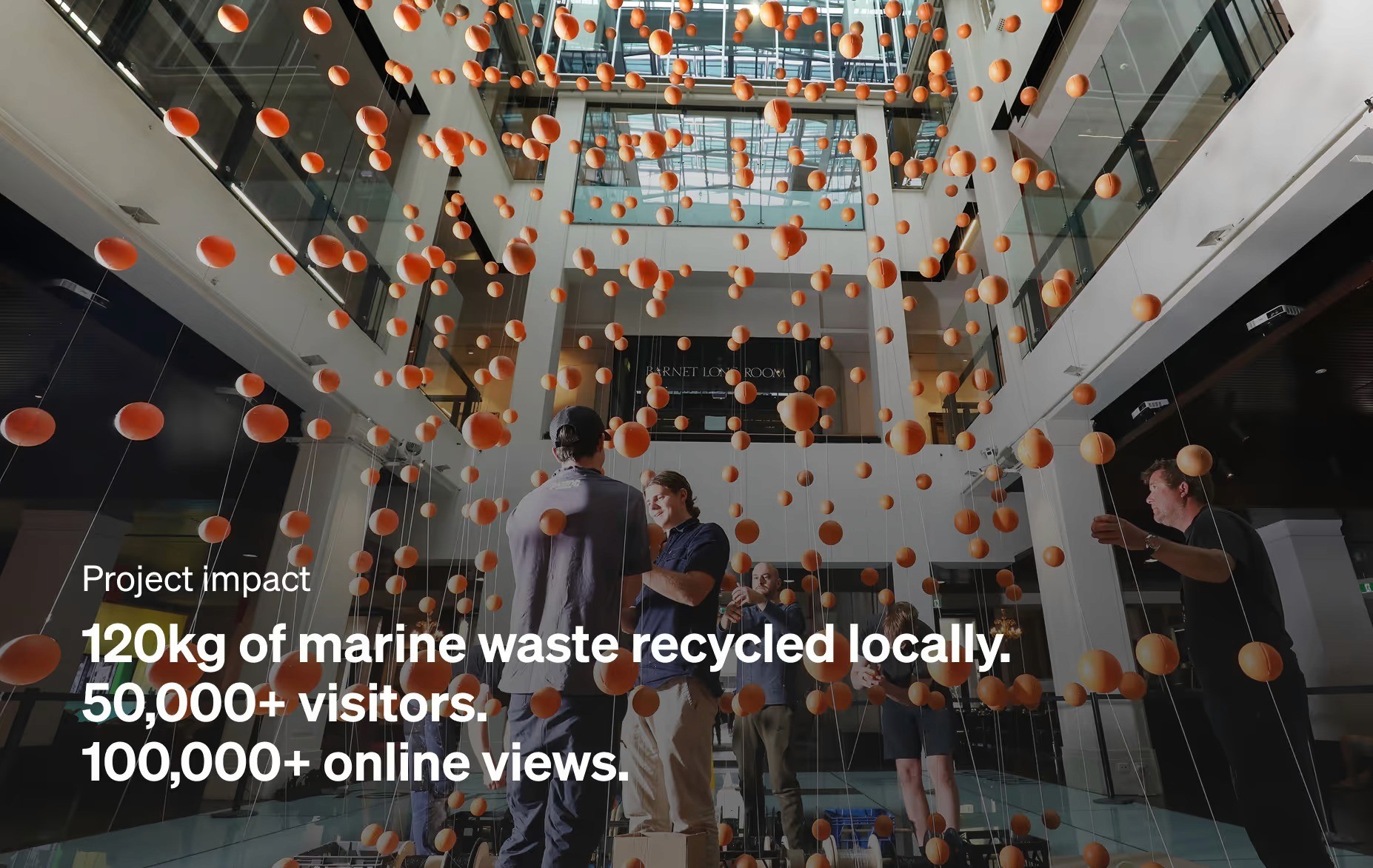
Wasteland was our own experiment, a chance to prove an idea rather than pitch one. In 2018, we suspended 2,255 glowing orange spheres from the 24-metre ceiling of Sydney's Customs House, each one made from marine plastic that had washed up on Australian shores.
It wasn't a campaign for a client. It was ReCo's own bet that if you give people something beautiful to look up at, they'll ask the harder questions themselves about waste, about what's possible, and about what a piece of rubbish could become if enough people cared to find out.
Supported by the City of Sydney's Art & About program, Wasteland became a joint effort between designers, manufacturers, riggers, and a marine debris collection crew, proof of what happens when a good idea finds the right collaborators.
Wasteland was built under our previous practice, Mundane Matters.

The brief: environmental awareness
Create a public experience striking enough that people would stop, look up and want to know more
Turn an environmental issue into a story people wanted to share, not one they felt lectured by
Build a piece of content and PR that could travel far beyond the physical installation
01 The idea: from a question to a concept
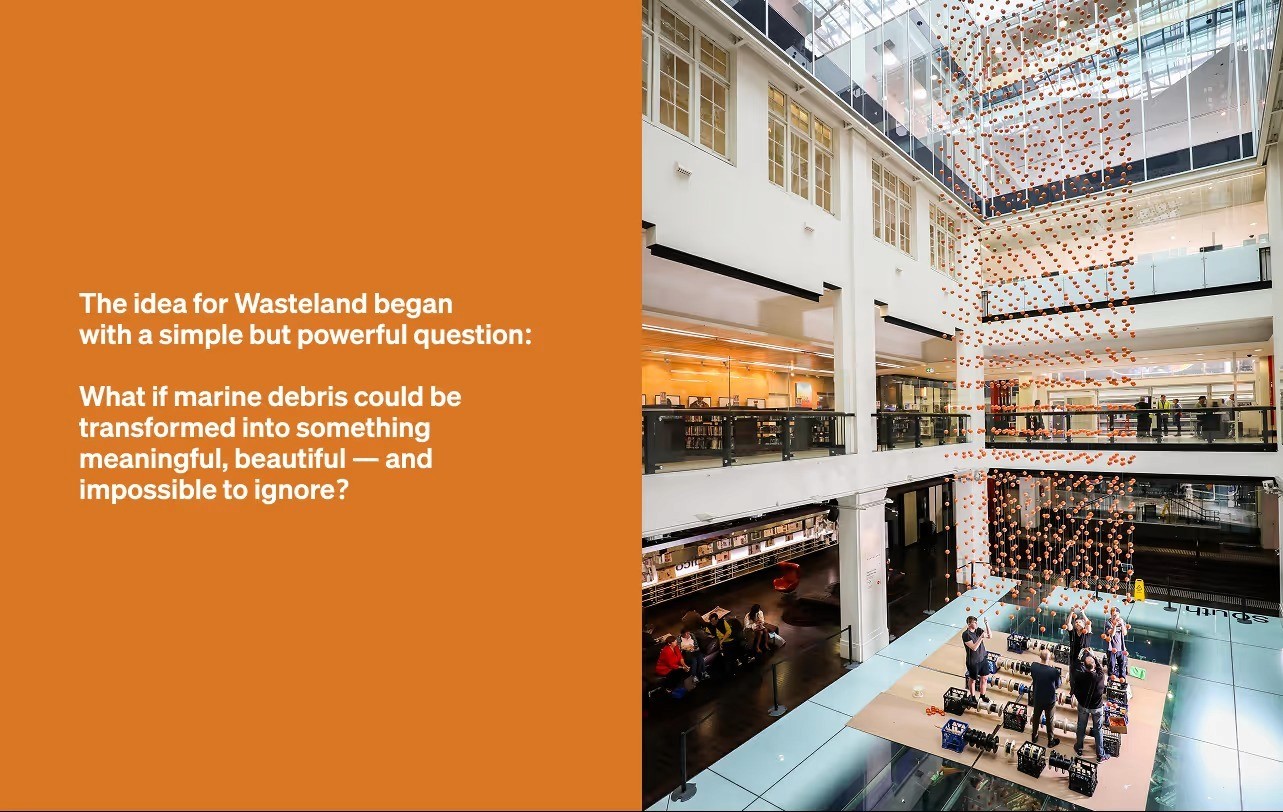
Every good story starts with a question worth asking. Ours was: what if marine debris could be transformed into something meaningful, beautiful and impossible to ignore?
We’d seen an experimental conservation project in Costa Rica and couldn’t stop thinking about it. Not the technical side, the feeling of it. The way turning waste into art changes how people relate to a problem they usually scroll past.
We spent time in research, sketching, and prototyping to shape that feeling into something concrete, then pitched it to the City of Sydney’s Art & About program. The strength of the idea and the story we could tell around it was what got Wasteland funded.
02 Building the story with the right collaborators
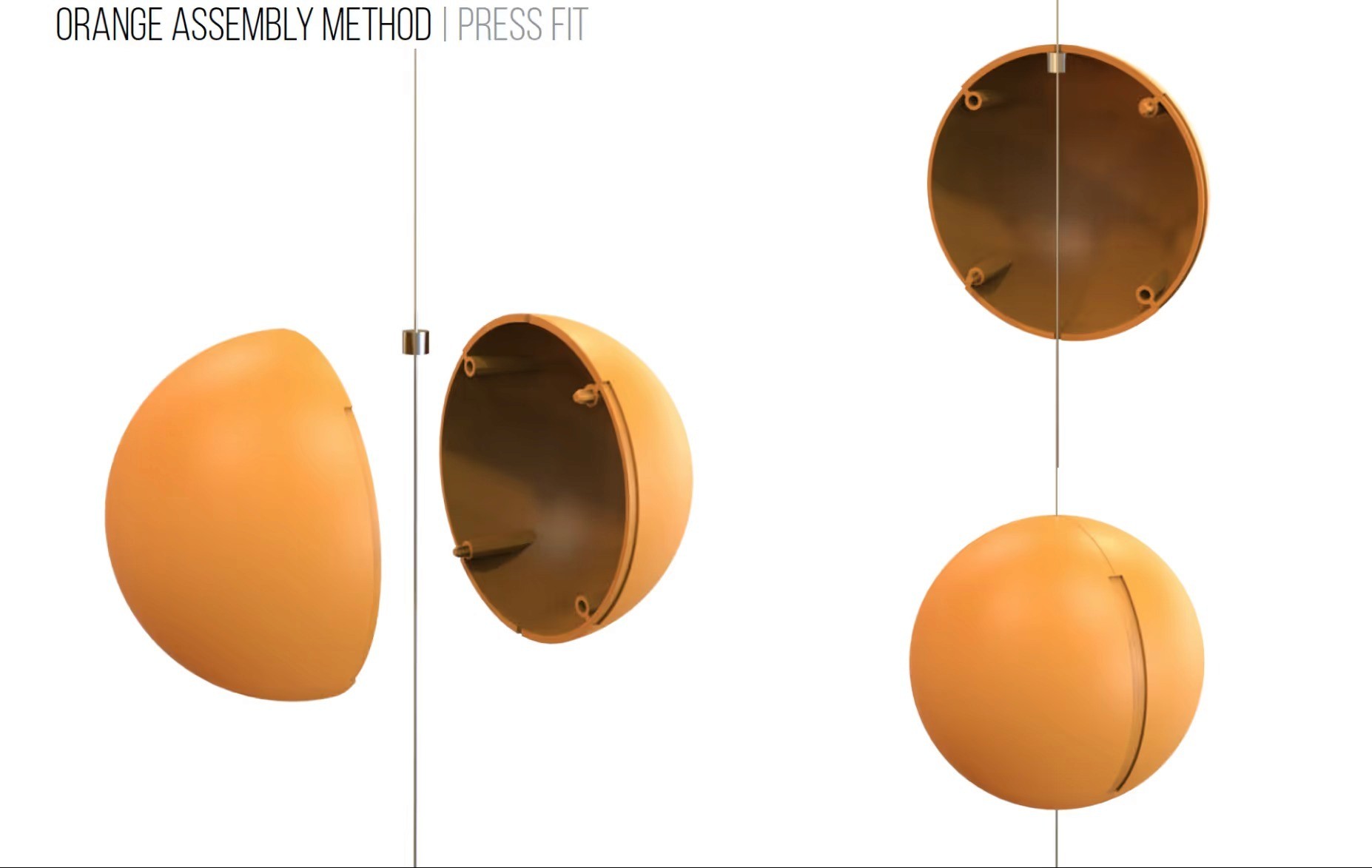
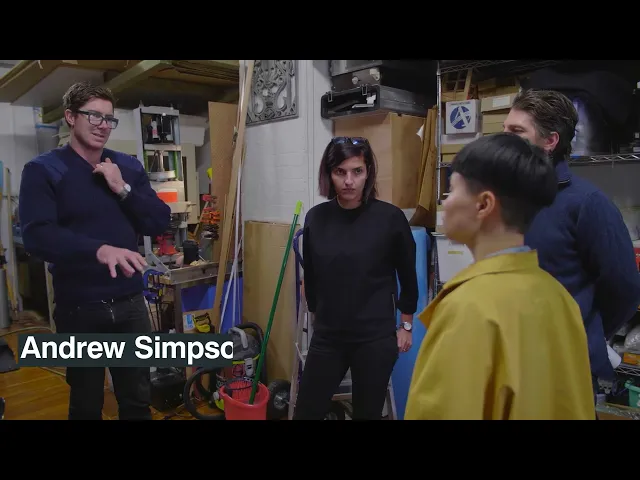
An idea this size needed more than one team. We brought together designers, manufacturers, riggers, and a marine debris collection partner, Eco Barge Clean Seas, each chosen not only for their craft but also for how well their work would translate into a story worth telling.
Every decision, from the warm orange of the spheres to how they’d hang in the light, was made with the audience’s experience front of mind. This wasn’t just production. It was set design for a story; we wanted a city to walk through.
03 A moment 24 metres in the air
Getting Wasteland into Customs House was its own feat of coordination: careful rigging, tight timelines, and a genuine question of whether it would land the way we’d imagined.
It did. Suspended 24 metres above the atrium floor, the installation became the kind of moment people paused for, photographed and talked about on the way out, exactly the reaction a piece of content marketing dreams of, built in physical space.
04 Telling the story: content and digital engagement
The installation was only half the campaign. The other half was making sure the story reached people who’d never set foot in Customs House.
We built a digital storytelling campaign around Wasteland photography, video and social content designed to carry the feeling of standing under it to anyone scrolling past. A short video produced with the City of Sydney reached nearly 40,000 views in its first week alone.
Coverage in outlets like The Design Files added momentum, and between the on-site crowd, the video and earned media, Wasteland reached an estimated online audience of 100,000 people. It became a shared conversation about waste, about design, about what’s possible, carried by the city’s own marketing team and our Instagram community as much as by us.
05 Why the story outlasted the installation
Wasteland came down eventually. The story didn’t. It gave our design and manufacturing collaborators a real, proven case for exploring commercial applications of marine debris, and it gave ReCo a live example of something we believe deeply: that a well-told story is the fastest way to make people care about a problem they’d normally look away from.
Project impact
First public installation in Sydney to pair recycled marine debris with commercial-scale production
Engaged 50,000+ in-person visitors and reached 100,000+ people online through digital content
A short-form video that hit nearly 40,000 views in its first week
National and industry media coverage, including The Design Files
Opened the door for design and manufacturing collaborators to explore marine debris commercially
Key takeaways for culture, arts & creative organisation marketing
A strong story is the difference between an installation people see and one they talk about
Public art can carry a message further and more warmly than a straightforward campaign ever could
The best content doesn’t explain the issue; it makes people feel curious enough to ask about it themselves
Visual storytelling bridges the gap between policy, business, and public engagement
Government grants can unlock high-impact creative work that a brand budget alone rarely would
Wasteland: FAQs
How do you turn a sustainability idea into something people want to share?
You lead with a feeling, not a statistic. Wasteland never opened with numbers about ocean plastic; it opened with 2,255 glowing spheres suspended above people’s heads and let curiosity do the rest. Once someone’s genuinely drawn in, they’ll ask the harder questions on their own, and the answers land far better than if you’d led with them. That’s the difference between content people scroll past and content they stop for.
What makes public art work as a content marketing asset?
Scale, and a story built for more than one audience. Wasteland was designed to hit differently depending on who encountered it, whether that was someone walking through Customs House, watching a 30-second video, or reading a feature in The Design Files. Building the digital campaign alongside the physical installation, not after it, is what let the story travel to an audience 20 times larger than the people who ever saw it in person.
How do you get media coverage for a one-off project?
You give journalists a genuinely good story, not a press release. Wasteland’s coverage came from the strength of the concept and the visuals, not from a pitch built around sustainability messaging. The most shareable projects give media outlets something visually striking to run with the message, which follows naturally once people are already looking.
Is it worth applying for government or council funding for a creative project like this?
Yes, if the idea is strong enough to be worth telling twice. Wasteland was only possible because we secured funding through the City of Sydney’s Art & About program, and that support did more than cover costs. It gave the project institutional backing that made media outlets, collaborators, and audiences take it more seriously. A well-pitched grant application can unlock a scale of creative work a standalone brand budget rarely stretches to.
How do you measure the ROI of a public art brand experience project?
Look past the installation and count the story’s full reach. Wasteland’s real return wasn’t just the 50,000-plus people who walked through Customs House; it was the 100,000-plus who encountered the story online, the coverage it earned, and the commercial conversations it opened up for our collaborators afterwards. A physical experience is often just the spark; the content built around it is what carries the value further and for longer.
Services
Concept and content creation
Installation concept development · Photography and video direction · Social content production
Viral content strategy
Platform-native storytelling design · Digital campaign built alongside the physical build · Content built to travel beyond the installation
PR and media outreach
Earned media pitching · Press and design-press coverage (The Design Files) · Institutional and government media amplification
Community engagement
On-site audience experience design · Instagram community engagement · City of Sydney audience amplification
Influencer and partnership marketing
Collaborator and partner coordination (designers, manufacturers, riggers, Eco Barge Clean Seas) · City of Sydney Art & About partnership · Cross-network amplification with the city’s marketing team
Credits
Creative direction: Danling Xiao / ReCo Digital
Photos: City of Sydney / Katherine Griffiths
Video: City of Sydney / Jordi Marin
Technical drawing: Vert Design Studio / Andrew Simpson & Nila Rezaei (now RK Collective)
Manufacturer: Mastroplas
Rigging: Pacific Rigging
Installation: Daniel Hollier
Marine debris collection: Eco Barge Clean Seas Inc
Case study: written by Gabrielle Dela Cruz
Volunteers and other suppliers


